Q4 2026 edition, published Nov 4, 2026
BLS price data through Oct 2026 (Jul 2026 to Oct 2026 preliminary). Rates through Nov 12, 2026. Lender quotes from Sep 29, 2026. Refreshed Nov 16, 2026 and after each monthly BLS producer price release; next release Dec 15, 2026.
- Escalation ranges for ten scopes: steel, wood, roofing and envelope, sitework, concrete, electrical, plumbing and HVAC, field labor, masonry and drywall. A mid trend, a 12-month swing and a Low/Mid/High range for each, with an outlook.
- Material prices: 23 BLS producer price indexes with 3-month, 12-month and 5-year change and how far each sits below its 5-year high.
- What subs and GCs are charging: BLS bid-price indexes for trade contractors and new buildings, by region, and the margin squeeze between input costs and bid prices.
- Labor tightness by metro: construction jobs and wages for 51 metros, with a suggested labor case. A market reading, not a crew rate.
- Cost of money: SOFR, prime, the 10-year Treasury and 30-year mortgage, construction loan quotes, the NAHB AD&C survey and where SOFR is implied to go.
- Earthwork fuel: diesel by region, with road taxes removed for dyed off-road fuel.
The estimator workbook (Excel)
- 1. Start Here: jump links by job to be done, live results for a sample job and what moved in the last three months
- 2. Bid Escalation: base cost and buyout date by scope; returns Low, Mid and High escalation, the amount to carry and the contingency to cover the high case
- 3. Escalation Clause: a ConsensusDocs 200.1-style price adjustment for steel, wire, lumber or any BLS index, with trigger, share and cap, and Schedule A text to paste
- 4. Price Claim Check: test up to 25 supplier or sub price increases against the index, or roll an old cost forward
- 5. Loan Carry & Reserve: S-curve draws, equity first, interest reserve on the SOFR path, a +100 bp stress and a contingency check
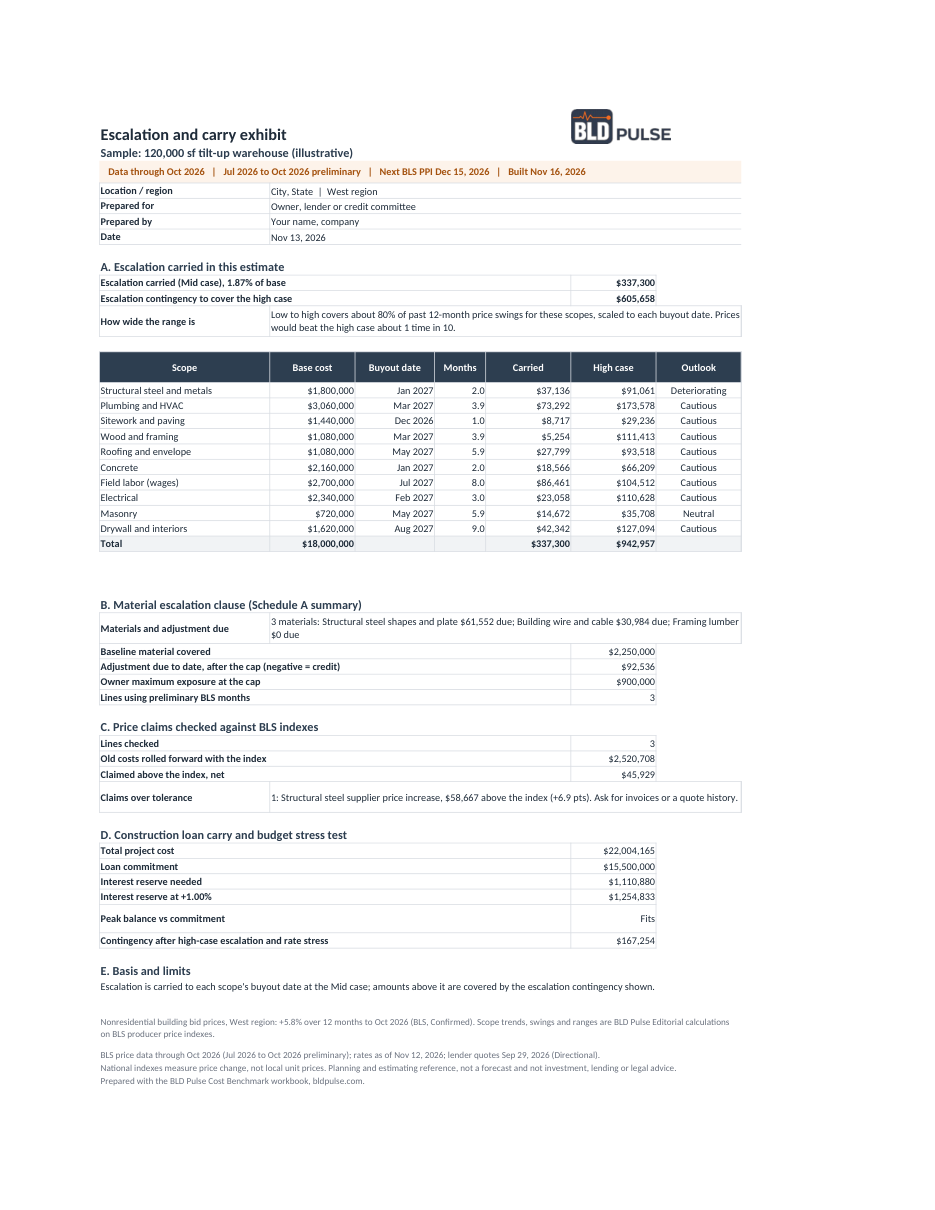
- 6. Exhibit: a one-page escalation and carry exhibit for a bid, qualification or credit memo
- 7. Reference tabs: Scope Benchmarks, Material Prices, Bid Prices & Labor, Cost of Money, Earthwork Fuel, Scope Index, Price History and Sources
Yellow cells are inputs; every other cell is a formula you can audit. No macros and no hidden sheets.
Sample exhibit
The Exhibit tab for the workbook’s illustrative $18 million tilt-up warehouse, as printed. Free to view.
Editions
The newest edition is for Pro members. The edition before it is free. Older editions stay in the Pro archive.
- Q4 2026 · Report and workbookCurrent · Pro
- Q2 2026 · ReportPrior · Free
The next edition (Q1 2027) follows the February 2027 BLS producer price release. Between editions the workbook and report are refreshed after each monthly BLS producer price release. Escalation ranges extrapolate recent trends; they are not forecasts. Lender quotes are directional and vary by sponsor, leverage, market and lender. For planning and estimating reference only, not investment, legal, financial or professional construction advice.
Inside the workbook
Three tabs from the sample job, as they look in Excel. Numbered markers match the notes. Click an image to enlarge it.
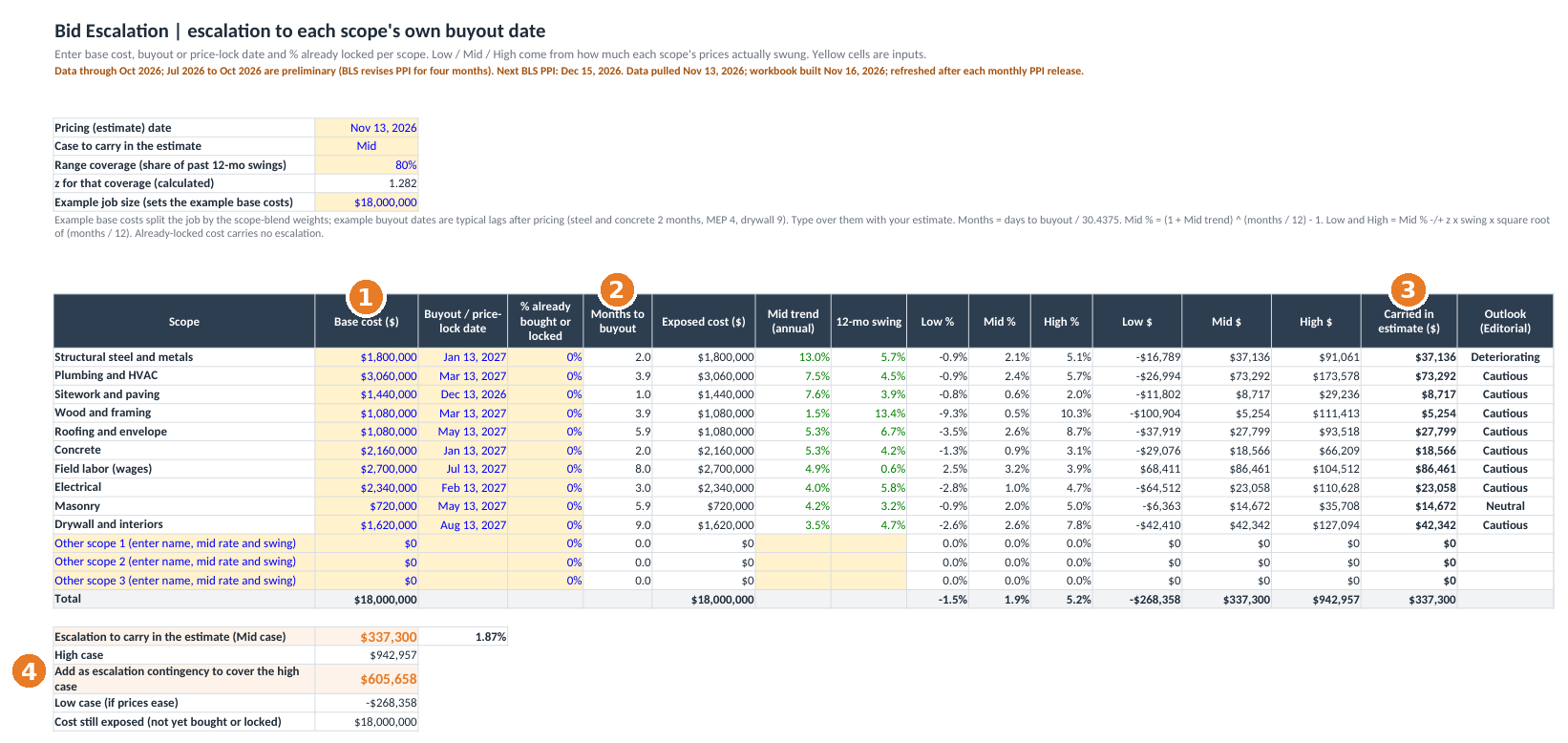
- Yellow cells are inputs: base cost, buyout or price-lock date and the share already bought, per scope.
- Months to buyout set how long each scope is exposed. Steel bought in 2 months carries far less than drywall bought in 9.
- Carried in estimate: the Mid case, scope by scope, to that scope's own buyout date.
- The gap to the High case, sized as an escalation contingency.
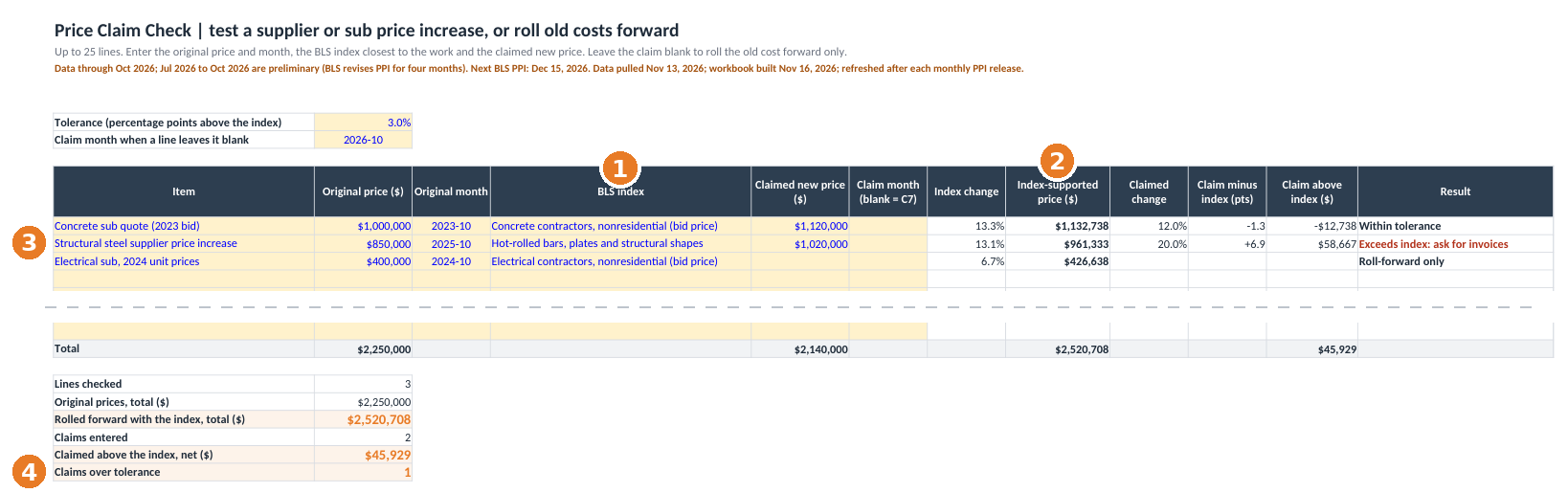
- Pick the BLS index closest to the work: a trade bid-price index for sub quotes, a material index for material buys.
- What the original price would be today if it had moved with the index.
- Lines above tolerance are flagged so you know which claims to ask invoices for.
- Counts and dollars roll up to the Exhibit.
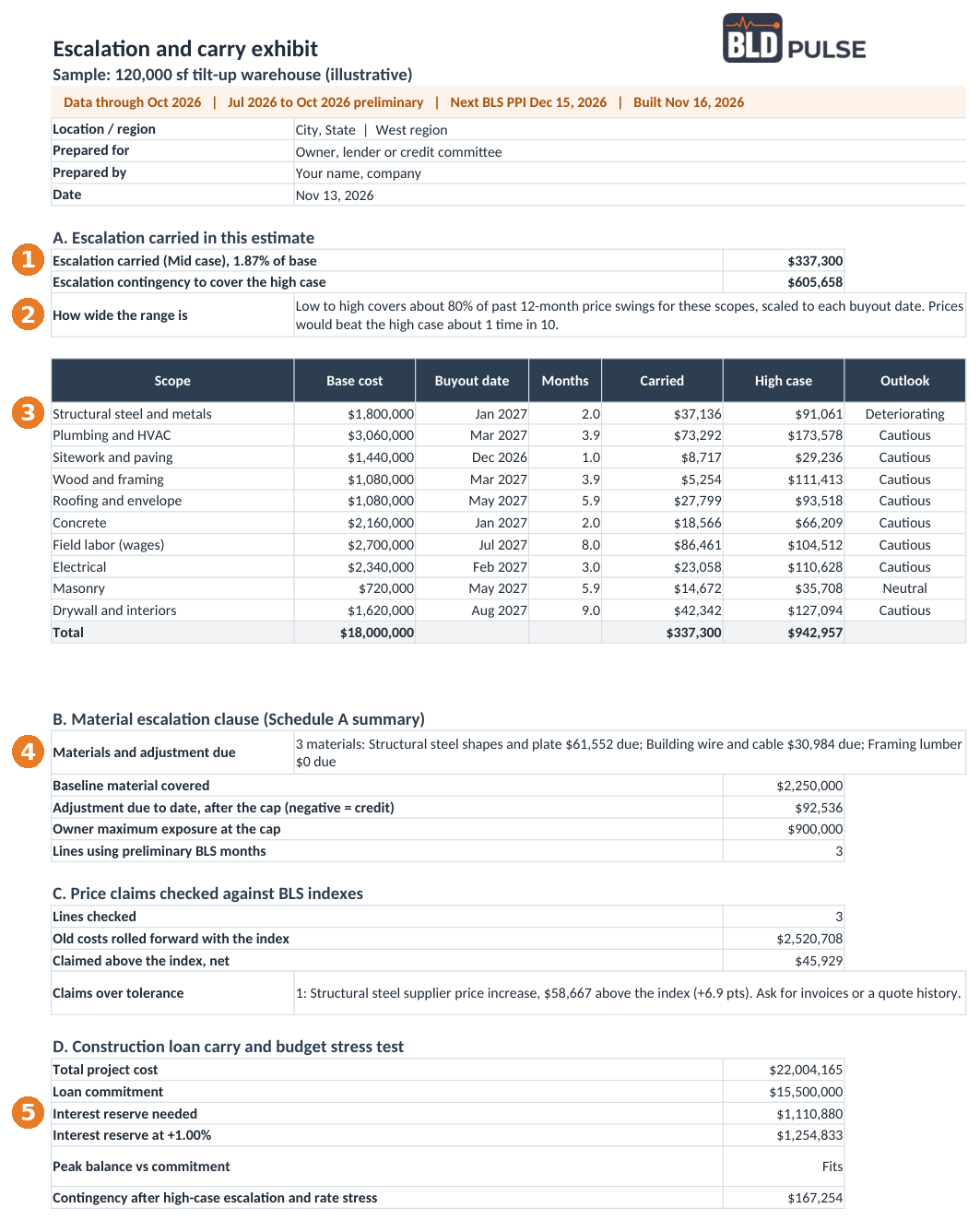
- The bottom line first: escalation carried and the contingency to cover the High case.
- How wide the range is, in plain English.
- Only scopes you priced, each to its buyout date.
- Material clause and price claims, with materials and flagged claims named.
- Construction loan carry, interest reserve and the budget stress test.